

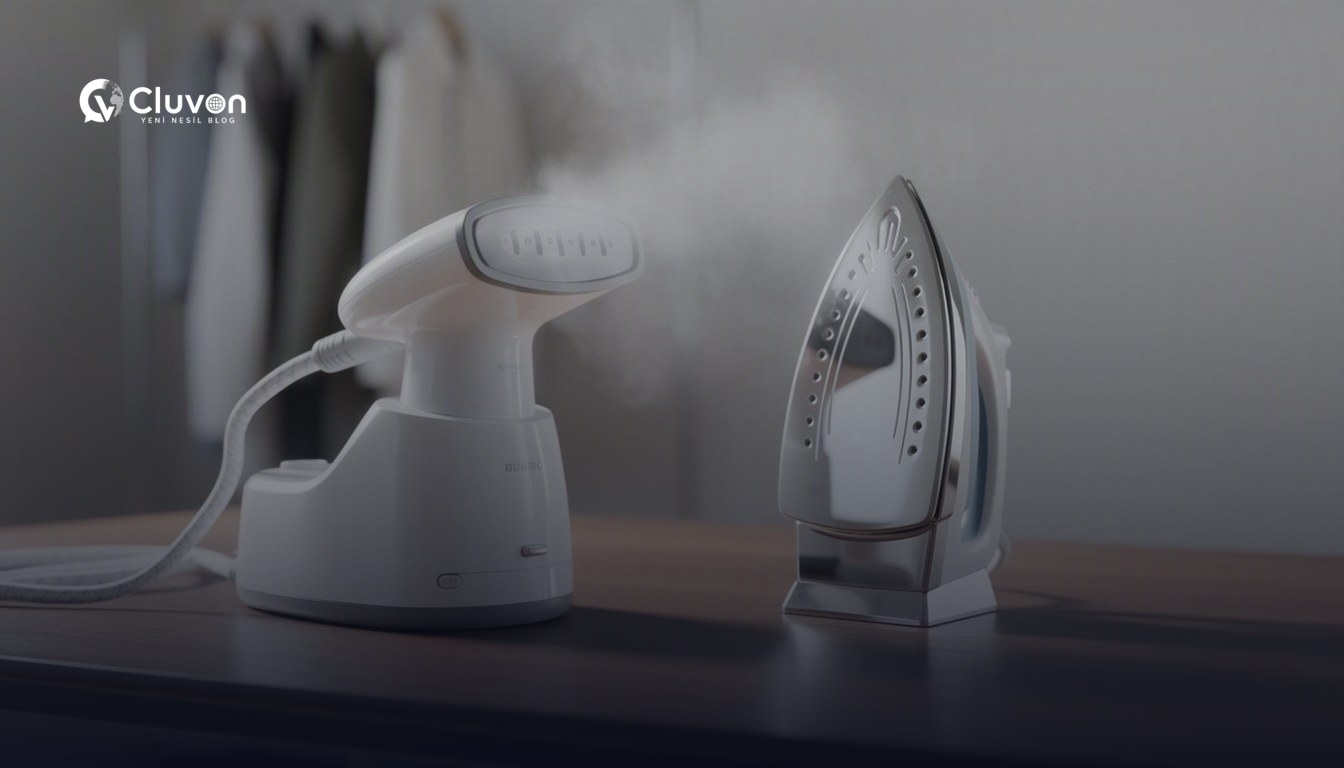

When comparing steam garment steamer vs iron, the better tool depends on what “quick” means in real life. If you want fast wrinkle reduction with minimal setup and less contact with fabric, a garment steamer often feels easier. If you want sharper lines, flatter surfaces, and a more polished finish, an iron usually delivers stronger results. For most wardrobes, the fastest choice is the one that matches the fabric, the wrinkle depth, and how finished you need the clothing to look.
Steam Garment Steamer vs Iron at a Glance
For a quick clothes refresh, a garment steamer usually wins on ease and speed for light to moderate wrinkles, while an iron wins on precision and crispness. The real answer in steam garment steamer vs iron is not universal: it changes based on fabric, garment shape, and whether you need “good enough fast” or “cleanly pressed.”
A garment steamer works by relaxing fibers with steam while the clothing hangs vertically. That makes it especially convenient for shirts, dresses, blouses, and items that are awkward to lay flat. It can be a practical choice when you are getting ready quickly and want to improve the look of a garment without setting up an ironing board.
An iron uses direct heat and pressure to flatten wrinkles more aggressively. That extra contact is what creates sharp creases and a neater, more tailored finish. If your goal is a business shirt with defined edges or trousers with a crisp line, an iron remains hard to beat.
Here is the simplest comparison:
| Factor | Garment Steamer | Iron |
|---|---|---|
| Best for speed | Light refresh on hanging clothes | Fast only if already set up |
| Best finish | Soft, natural, relaxed | Crisp, flat, structured |
| Best for delicate handling | Often easier | Needs more care by fabric |
| Best for deep wrinkles | Moderate results | Stronger results |
| Best for crease-making | Poor choice | Excellent choice |
| Best for convenience | High | Moderate |
When a Garment Steamer Is the Better Choice
A garment steamer is usually better when you need visible improvement quickly, without chasing a perfectly pressed finish. In steam garment steamer vs iron, the steamer stands out for convenience, gentler handling, and the ability to refresh clothes while they stay on a hanger.
This is especially useful for garments with movement, drape, or shape. A blouse with ruffles, a dress with pleats, or a shirt that only has mild wrinkles can often look presentable faster with steam than with an ironing setup. The process feels more forgiving because you are not pressing a hot plate directly onto the fabric surface.
A steamer is often the stronger option when your priority is:
- quick wrinkle reduction before leaving home
- refreshing clothes that were folded or lightly packed
- handling delicate-looking fabrics more cautiously
- working on garments with linings, seams, or textured details
- avoiding shine marks or pressure on the fabric surface
Another reason a steamer can feel faster is workflow. Hanging a garment, steaming downward, and moving on to the next piece is often simpler than repositioning fabric repeatedly on an ironing board. If your wardrobe leans toward soft, flowy, or casual pieces, a steamer can fit daily use better.
When an Iron Clearly Wins
An iron clearly wins when you need a sharp, polished result rather than a basic refresh. In the steam garment steamer vs iron debate, the iron remains the stronger tool for flattening stubborn wrinkles and creating a more deliberate, dressed look.
This matters most for structured garments. Button-down shirts, tailored pants, cuffs, collars, and hems often look noticeably better after ironing because heat plus pressure smooths the fabric more completely. Steam alone can soften wrinkles, but it usually cannot match that pressed finish.
Choose an iron when you want:
- crisp collars and cuffs
- flat plackets and button areas
- defined trouser creases
- stronger results on deep-set wrinkles
- a formal or office-ready appearance
An iron also gives more control on specific problem areas. If one section is badly wrinkled, you can target it directly and press it into shape. That precision matters when presentation is important. So while a steamer may feel easier, an iron often produces the result people associate with being fully pressed and ready.
Fabric Types and Wrinkle Scenarios
The best choice depends heavily on fabric behavior and wrinkle depth. In steam garment steamer vs iron, steam is often enough for lighter wrinkles and softer materials, while an iron is usually better for thicker fabrics and wrinkles that are deeply set from folding or drying.
Think about the garment in two ways: how delicate or structured it is, and how severe the wrinkles are. That simple framework makes the decision easier.
Best tool by fabric feel
A steamer tends to suit fabrics that benefit from a lighter touch and natural drape. An iron tends to suit fabrics that need flattening and structure. If you are unsure, the finish you want is the deciding factor: relaxed or crisp.
| Fabric or garment feel | Usually better tool | Why |
|---|---|---|
| Soft, drapey, flowy | Steamer | Keeps movement and shape |
| Structured, woven, tailored | Iron | Adds flatness and definition |
| Textured or detailed | Steamer | Easier around trim and seams |
| Thick or stubbornly wrinkled | Iron | More forceful smoothing |
Best tool by wrinkle severity
Light wrinkles are where steam shines. Deep creases from storage, dense folding, or long wear often respond better to ironing. If a garment looks slightly crumpled rather than sharply creased, a steamer is often enough for a quick upgrade.
A practical rule of thumb:
- light wrinkles: steamer is often the faster choice
- medium wrinkles: either tool can work depending on fabric
- deep creases: iron is usually more effective
- detail areas like collars: iron is usually better
- full-garment refresh with minimal fuss: steamer is often easier
Speed, Setup, and Daily Convenience
For real-world convenience, a garment steamer often feels faster because it removes steps from the routine. In steam garment steamer vs iron, the steamer usually wins for grab-and-go use, while the iron can feel slower unless your board and station are already ready.
This difference matters on busy mornings. With a steamer, you can often keep the garment hanging, work vertically, and finish without repositioning every panel. That saves effort, especially on dresses, shirts, and lightweight layers.
An iron becomes more efficient when you are pressing several items in one session. Once the board is up and you are moving steadily, ironing can feel productive, especially if the garments are similar. But for a single shirt or one last-minute refresh, the setup can feel like the longest part of the task.
Daily convenience usually favors the steamer because:
- it works directly on hanging clothes
- it is easier on awkward garment shapes
- it often requires less repositioning
- it suits quick wardrobe touch-ups
- it is less focused on perfect crease alignment
If your priority is reducing friction in your morning routine, a steamer often matches that goal better than an iron.
Finish Quality and Overall Results
If the result matters more than the process, an iron usually produces the stronger visual finish. In steam garment steamer vs iron, steam makes clothes look fresher and less wrinkled, but ironing usually makes them look more intentionally polished.
That difference is easy to see in structured clothing. A steamed shirt can look clean and acceptable, yet still slightly soft around the edges. An iron sharpens the outline of the garment, flattens seams more decisively, and creates the kind of finish often associated with formal dressing.
That said, not every outfit needs that level of precision. Many casual and modern wardrobes actually benefit from a softer appearance. Knitwear, flowing tops, relaxed shirts, and everyday dresses often look perfectly right with a steamed finish. In those cases, ironing may be unnecessary effort.
The choice comes down to expectations:
- choose a steamer for “fresh, neat, ready to wear”
- choose an iron for “crisp, sharp, professionally pressed”
Neither result is automatically better. The better result is the one that matches the occasion, the garment, and the time you have available.
How to Choose Between a Steamer and an Iron
The easiest way to choose is to start with your wardrobe and routine, not the tool itself. In steam garment steamer vs iron, the better option is the one that solves your most common wrinkle problem with the least friction and the most acceptable finish.
Ask yourself three simple questions:
1. What do you wear most often?
If your closet is full of dresses, blouses, soft shirts, and easy everyday pieces, a steamer may fit naturally. If you wear structured shirts, trousers, uniforms, or formal items often, an iron is usually more useful.
2. What kind of result do you expect?
If “good enough to look fresh” is your standard, a steamer can be the smarter tool. If you notice cuffs, seams, collar shape, and overall flatness, you will likely prefer an iron.
3. How do you actually get ready?
If you often rush, refresh one item at a time, or dislike setting up an ironing board, a steamer may get used more often. If you batch care for clothes and want consistently pressed results, an iron may be more practical.
A simple decision guide:
| Your priority | Better choice |
|---|---|
| Fast touch-ups | Steamer |
| Formal finish | Iron |
| Delicate-looking garments | Steamer |
| Deep wrinkle removal | Iron |
| Easy daily use | Steamer |
| Sharp creases | Iron |
In many homes, the most realistic answer is not either-or but “use each for what it does best.” Still, if you are picking only one for quick clothes refresh, your wardrobe habits should decide the winner.
FAQ
Is a garment steamer better than an iron for everyday use?
For many people, yes—especially if everyday use means quick wrinkle reduction on hanging clothes. A garment steamer is often easier to reach for, simpler for soft garments, and more convenient for fast touch-ups. An iron is better if your everyday clothes need a crisp, pressed appearance.
Can a steamer replace an iron completely?
Sometimes, but not always. A steamer can handle many casual and lightly wrinkled garments well, yet it usually does not replace an iron for sharp creases, formal shirts, collars, cuffs, or deep wrinkles. Replacement depends on the finish you expect from your clothes.
Which is faster for one wrinkled outfit?
A garment steamer is often faster for one outfit because the garment can stay on a hanger and requires less repositioning. An iron may still be faster for a specific flat area, but overall setup and handling usually make a steamer feel quicker for last-minute use.
Which gives a more professional-looking result?
An iron usually gives the more professional-looking result. Direct heat and pressure create flatter surfaces, sharper edges, and cleaner lines. A steamer gives a softer, more natural finish that works well for many outfits but usually looks less formal.
Conclusion: Steam Garment Steamer vs Iron
The answer to steam garment steamer vs iron is simple: choose a steamer for speed, ease, and a relaxed ready-to-wear finish; choose an iron for structure, crispness, and stronger wrinkle removal. If your goal is a quick clothes refresh, a steamer often feels more convenient. If your goal is the sharpest possible presentation, an iron still leads.
Before you choose, think about the clothes you wear most, the finish you expect, and how much setup you are willing to tolerate. The best tool is the one you will actually use consistently.